
Insights · Naples and Collier County
Where a drained pool can legally go in Florida, and the rule FDEP still cites wrong
A pool gets emptied for a resurface, for a repair, or for a chemistry problem that will not clear, and then the water has to go somewhere. The question of where to drain pool water in Florida has a written answer, and it is not the one that gets upvoted.
 Clayton Waggoner, Owner and Managing Member · Published August 15, 2026 · 16 min read
Florida names dechlorinated swimming pool discharges as an authorized exception to illicit discharge, on one condition, that they do not cause a violation of water quality standards (Florida Administrative Code Rule 62-624.200(2)(q), 2003)1. In practice that condition is two numbers: total residual chlorine below 0.01 mg/L in the receiving water (Florida Administrative Code Rule 62-302.530, 2025)2, and pH between 6.5 and 8.5 before you discharge (Florida Department of Environmental Protection, 2020)3. Meet them and the water is legal. Miss them and it is not.
The short version
Is it against the law to drain a pool in Florida?
The rule is a definition rather than a permission slip, which is part of why almost nobody finds it. Rule 62-624.200(2) defines illicit discharge as any discharge to a municipal separate storm sewer that is not composed entirely of stormwater, then exempts a list of categories provided they do not cause a violation of water quality standards. Item (q) on that list is four words long: dechlorinated swimming pool discharges (Florida Administrative Code Rule 62-624.200(2)(q), 2003)1. The rule history on the state gateway shows it new on 22 October 2000 and amended 1 May 2003.
That puts Florida in a different position from several other states, and FDEP says so in its own guidance. Other states including Michigan, Pennsylvania, Maryland and New Jersey require public swimming pools to obtain a general National Pollutant Discharge Elimination System permit to discharge pool wastewater, and there is no such requirement in Florida, where dechlorinated swimming pool discharges are authorized under 62-624.200(2)(q) provided they do not cause a violation of water quality standards (Florida Department of Environmental Protection, 2020)3.
So the reframe worth carrying into the rest of this page is that the legal question here is not permission, it is condition. Nobody issues you anything. There is no form, no fee, and no inspector standing at the end of the hose. What exists instead is a standard the water has to meet at the moment it leaves, and published numbers that tell you whether it meets it. That is a better position for a homeowner than a permit would be, and it is also less forgiving, because there is nobody in the loop to catch a mistake before it becomes a violation.
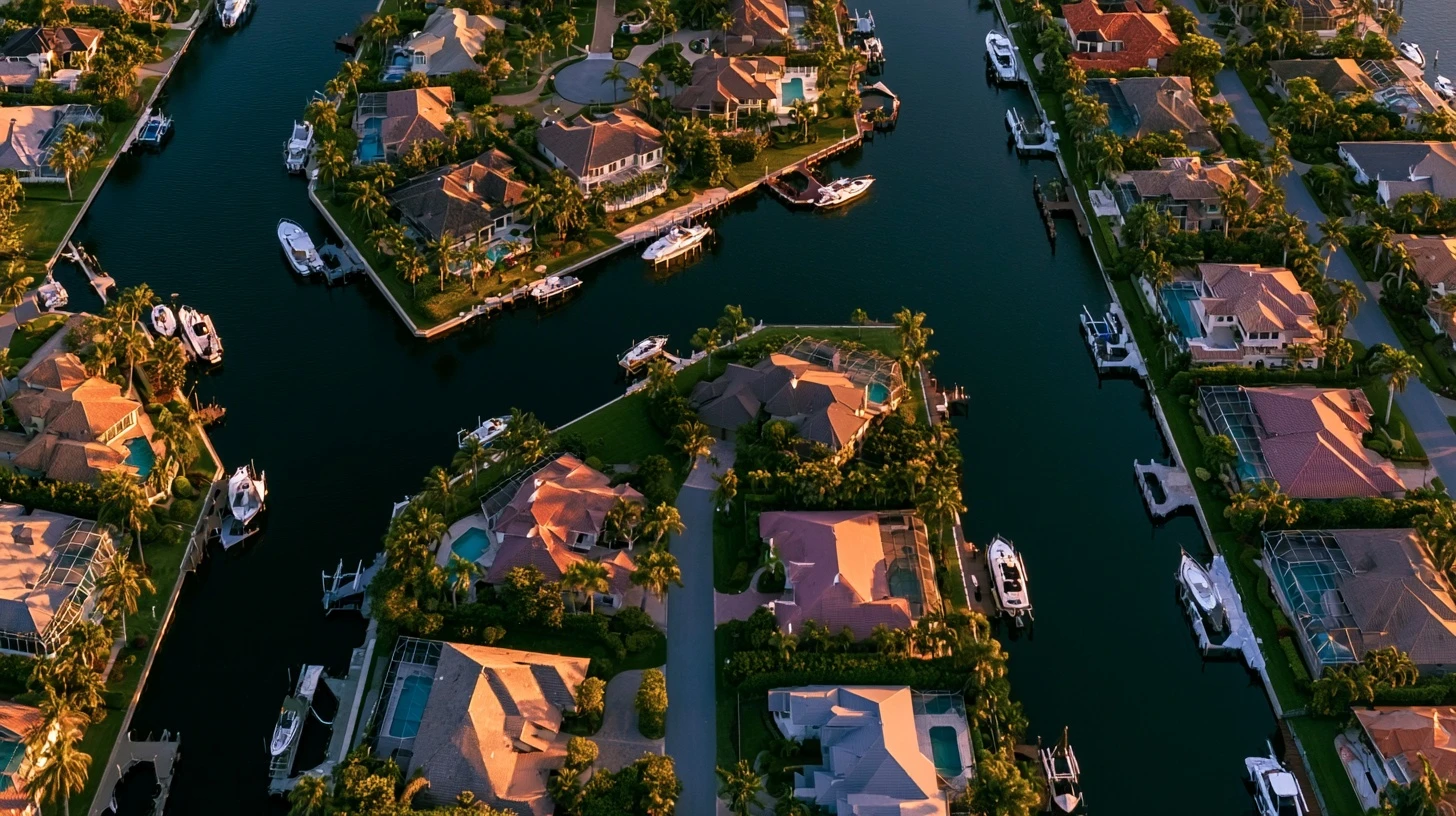
One boundary before the numbers. Rule 62-624.200 governs municipal separate storm sewer systems, which is the network of gutters, inlets, pipes, swales and outfalls that carries rain off streets and yards. A street gutter is part of that system. So is the swale in front of the house and the grate at the end of the block. If the water reaches any of them, the storm sewer case is the one you are in, whatever the hose looked like when you set it down on the grass.
What chlorine and pH numbers make pool water legal to discharge?
The chlorine figure is not a pool industry number and it was not written with pools in mind. It sits in the surface water quality criteria, the table that says what Florida waters are allowed to contain, and it reads total residual chlorine, milligrams per liter, less than 0.01, repeated identically across Class I, Class II, Class III and Class III-Limited waters (Florida Administrative Code Rule 62-302.530, 2025)2. There is no gentler tier for a residential canal. The same number applies to a drinking water source and to a ditch behind a house.
The reason the threshold sits that low is biological, and it is worth knowing because it is what makes the number stick. Chlorine and the other chemicals used to maintain pools and spas, which often include acidic or alkaline cleaning compounds, can have a negative impact on the plant and aquatic life in surface waters, and even at low levels chlorine can be toxic to aquatic life (Florida Department of Environmental Protection, 2020)3. A pool held at a normal sanitizer level is carrying hundreds of times the concentration the receiving water is allowed to contain.
The pH window is the second number and it gets forgotten far more often than the first. FDEP states it in one sentence: the pH must be between 6.5 and 8.5 before it is discharged (Florida Department of Environmental Protection, 2020)3. A pool that has just been acid washed, or one that has been sitting through an algae treatment, can easily be outside that band even after the chlorine has gone, and the chlorine test tells you nothing about it.
There is a third way to cause a violation that has no number attached at all. Turbidity associated with backwashing and cleaning can also violate surface water quality standards (Florida Department of Environmental Protection, 2020)3. That is the filter backwash case rather than the drain case, and it is the reason a cloudy discharge across a driveway and into a gutter is a problem even when the chemistry is clean.
Algaecides deserve their own sentence for the same reason. Algaecides containing copper or silver can interrupt algal and plant growth in surface water bodies and should be used with caution (Florida Department of Environmental Protection, 2020)3. Dechlorinating the water does nothing to a metal, so a pool that has been treated with a copper product is not made compliant by waiting for the chlorine to fall.
| What is measured | The limit | The instrument that sets it |
|---|---|---|
| Total residual chlorine in the receiving water | Less than 0.01 mg/L | F.A.C. Rule 62-302.530, Surface Water Quality Criteria, as amended 25 November 20252 |
| Free chlorine residual in the pool before you discharge | None should be detected on a test | FDEP Green Lodging Program stormwater guidance, 20203 |
| pH of the water before you discharge | Between 6.5 and 8.5 | FDEP Green Lodging Program stormwater guidance, 20203 |
| Turbidity from backwashing and cleaning | No number published for the homeowner case | Named by FDEP as a second way to violate surface water quality standards3 |
How long do you have to wait after adding chlorine before you drain?
The order of operations is short, and every step in it is in the source. Stop adding chlorine. Let the water stand for at least 48 hours, or dechlorinate it if the schedule will not allow that. Test the free chlorine residual and confirm nothing is detected. Check that the pH sits between 6.5 and 8.5. Then, and only then, open the valve, and put the water somewhere the next section describes (Florida Department of Environmental Protection, 2020)3.
FDEP words the wait as at least 48 hours after the last addition of chlorine or until the free chlorine residual is at or below 0.01 mg/L, and adds that if you need to drain your pool quickly you can buy chlorine-neutralizing chemicals such as sodium thiosulfate at a local pool supply company (Florida Department of Environmental Protection, 2020)3. The shortcut is real. What it does not do is remove the test step, because a dose of neutralizer is an estimate until an instrument says otherwise.
The test is the step homeowners skip, and it is the only one that produces evidence. FDEP is direct about the standard it is measured against: test the free chlorine residual before discharging, and a free chlorine residual should not be detected (Florida Department of Environmental Protection, 2020)3. Not low. Not acceptable. Not detected. That is a much easier instruction to satisfy than it sounds, and much harder to satisfy by eye.
Timing has a second layer to it that catches people here in the dry season. FDEP says to drain only when necessary, to avoid draining or backwashing during periods of drought and during significant rainfall, and not to drain a pool when watering restrictions are in place (Florida Department of Environmental Protection, 2020)3. Whether any restriction is in force in your area on the day you plan to drain is a question for the water management district and your utility, and it is worth asking before the truck is booked rather than after.
One thing worth settling before you drain anything. If the reason the level is falling is not the reason you think it is, emptying the pool removes the evidence, and working out whether it is a leak or evaporation is a separate diagnosis with its own numbers. Run that first if there is any doubt.
Why does FDEP's own guidance still cite a rule that was repealed in 2016?
Take the repeal first, because it is the cleaner of the two. The Florida Department of Health rule 64E-9.007, Recirculation and Treatment System Requirements, carries a rule history that ends in one word: new 5 October 1993, formerly 10D-5.136, amended 27 December 1998, 27 May 2004 and 24 May 2009, repealed 20 July 2016 (Florida Administrative Code Chapter 64E-9, 2016)4. The chapter index says the same thing in a column of its own. That is a rule history, and it is the only thing 64E-9.007 can honestly be cited for now.
FDEP quotes a sentence out of that rule which reads well and is still quoted around the internet as though it were live: pool waste water shall be discharged through an air gap, and disposal shall be to sanitary sewers, storm sewers, drainfields, or by other means, in accordance with local municipal and building official requirements including obtaining all necessary permits. That sentence appears here as a quote of a repealed rule, which is what it is (Florida Department of Environmental Protection, 2020, quoting former Rule 64E-9.007(15))34. It is useful as a description of ordinary practice. It is not a live requirement you can be held to under that number.
The second correction is smaller and easier to misread, so it is worth being exact about it. The 2020 guidance states that subsection 62-302.530(19) limits the discharge of chlorine to surface water bodies to 0.01 mg/L or less. In Rule 62-302.530 as amended 25 November 2025, that criterion sits at subsection (18) (Florida Administrative Code Rule 62-302.530, 2025)2. The subsection number moved. The number that matters did not. It is still less than 0.01 mg/L, and it still applies across all four water classes.
This is a correction and not a dunk, and the distinction matters for anyone deciding what to do with it. Nothing above says FDEP is wrong about the law. What is stale is a citation and a subsection number in a 2020 guidance document, which is the most ordinary kind of drift there is. The substance of that guidance is sound, and this page leans on it heavily: the 48 hour wait, the sodium thiosulfate alternative, the test-before-you-discharge rule, the pH window, the discharge handling rules and the sanitary sewer permission rule all come from it.
What a reader should rely on, in practice, is the primary text rather than the pointer. For the exception itself, Rule 62-624.200(2)(q) on the state rule gateway1. For the chlorine limit, the current text of Rule 62-302.530 rather than a subsection number quoted from a document written five years ago2. For the practical sequence, the FDEP guidance, read as guidance3. And for anything that turns on 64E-9.007, nothing, because there is nothing there to turn on.
| What the 2020 guidance cites | What the rule record shows | What to rely on instead |
|---|---|---|
| Rule 64E-9.007(15), Florida DOH, for pool wastewater disposal | That rule's own history reads repealed 20 July 2016 | The quoted sentence as a description of ordinary practice, not as a live requirement under that number |
| Subsection 62-302.530(19) for the chlorine limit | The criterion sits at subsection (18) in the rule as amended 25 November 2025 | The current text of Rule 62-302.530. The limit is unchanged at less than 0.01 mg/L |
| Rule 62-624.200(2)(q), F.A.C., for the exception itself | Current, effective 1 May 2003 | The rule itself, read on the state rule gateway |
Where can the water actually go, and whose permission does each route need?
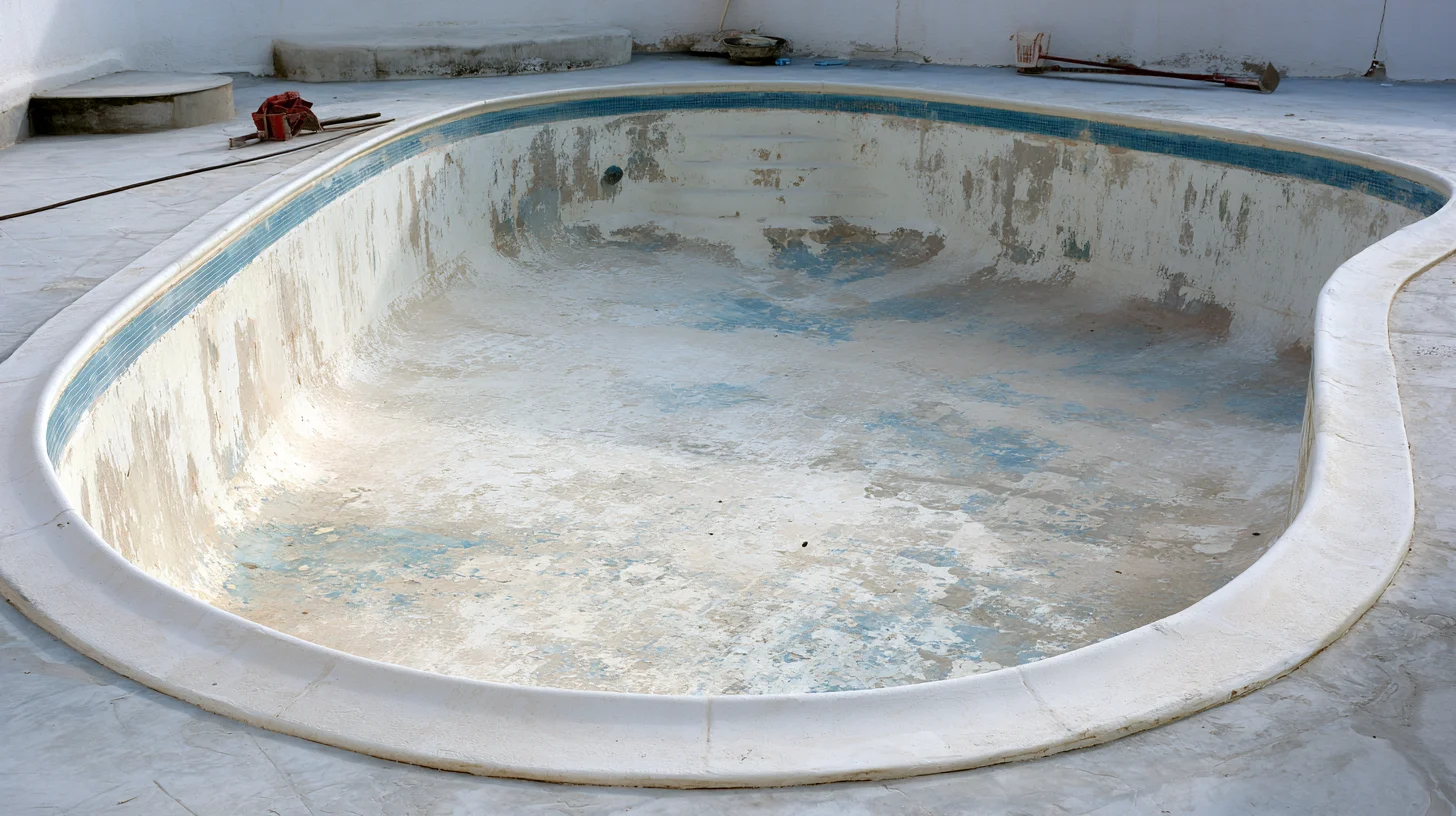
EPA sets out the three alternatives plainly: draining to a sanitary sewer, dechlorinating the water and then discharging to storm sewers, and dechlorinating the water and using it for irrigation (United States Environmental Protection Agency, 2023)5. On a residential lot in Collier County the third is usually the practical answer, because the yard is right there and the water is already going to end up in the ground either way.
The irrigation route comes with handling rules, and they are the part that gets skipped. Direct the discharge over a vegetated surface so that some level of filtration can occur. Control the rate of discharge across your property to avoid erosion and nuisance conditions for neighboring properties. Do not discharge on areas recently treated with herbicides or pesticides (Florida Department of Environmental Protection, 2020)3. A hose left running flat out at the property line is the standard way an otherwise compliant drain becomes a complaint.
The sanitary sewer route is the one with a phone call in it. Pool and spa wastewater should not be discharged into the sanitary sewer system without the permission of the wastewater treatment facility, and discharging to the sanitary sewer during or immediately after a significant rainfall event should be avoided (Florida Department of Environmental Protection, 2020)3. That is not a permit and there is no fee attached to it in the source. It is permission, and the utility is the one who grants it.
Most people reading this are emptying a pool for a reason rather than as an errand of its own. The commonest reason a Collier County pool gets emptied is a full chip out and pool resurfacing in Naples, and the water handling is part of that job rather than a separate problem to solve on the day. If the pool is emptying itself, that is a different job again and pool leak detection in Naples comes before anything else. And if you are working out what the job itself needs on the permit side, the $7,500 permit exemption in Collier County is the companion piece to this one.
The rules above are Florida rules, and they apply to Collier County's stormwater system as state rules. What this post cannot tell you is what your own local government adds on top. Collier County's own illicit discharge ordinance text could not be retrieved for this post, and the City of Naples and the City of Marco Island are separate jurisdictions whose requirements were not verified here. Before you open a valve inside either city, confirm with that city's own building or utilities department.
| Destination | What the water has to be first | Whose permission it needs |
|---|---|---|
| Sanitary sewer | Named by EPA as an alternative in its own right5 | The wastewater treatment facility, explicitly3 |
| Storm sewer, including a street gutter or swale | Dechlorinated, and not causing a violation of water quality standards15 | No permit in Florida. The two numbers are the condition123 |
| Irrigation across your own property | Dechlorinated, pH 6.5 to 8.5, over vegetation, rate controlled35 | No permit. Not onto ground recently treated with herbicides or pesticides3 |
Ask Clayton
Questions this article usually prompts
Tap a question. Clayton replies himself, here and on the phone.
Clayton Waggoner Owner and Managing Member · Splash Pools Online Tap a question to ask
If this is the situation you are in
Pool resurfacing in Naples, including the part everyone skips →Pool leak detection in Naples, with a finding before a shovel →Underground pool plumbing repair, with the smallest possible hole →Pool repair in Naples, diagnosed before it is quoted →References
- Florida Administrative Code Rule 62-624.200(2)(q). Municipal Separate Storm Sewer Systems, Definitions. Florida Department of Environmental Protection. Effective 1 May 2003
- Florida Administrative Code Rule 62-302.530. Surface Water Quality Criteria. Florida Department of Environmental Protection. Effective 25 November 2025
- Florida Department of Environmental Protection. Florida Green Lodging Program Best Management Practice, Stormwater Pollution Prevention. 25 February 2020
- Florida Administrative Code Chapter 64E-9, Florida Department of Health. Rule 64E-9.007 rule history, repealed 20 July 2016. Cited for the rule history only, never as live law
- United States Environmental Protection Agency. NPDES Stormwater BMP, Educating Residents on Safely Discharging Chemically Treated Water. 12 January 2023

The article is general.
Your pool is specific.
Tell us what the pool is doing, a sentence or two is enough. The person who wrote this is the person who calls back.